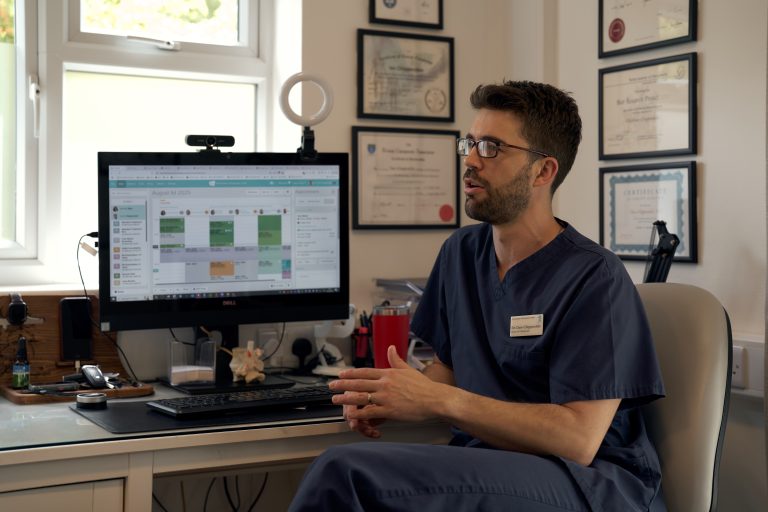
Do Chiropractic Neck Adjustments Cause Strokes? Separating Fact from Fear
What’s Really Happening: Correlation vs Causation
In recent years, a few high-profile tabloid stories have highlighted rare cases where someone appeared to suffer a serious injury after visiting a chiropractor. These reports, often lacking important medical context, can understandably raise alarm. But while such cases do deserve careful attention, they are exceptionally rare and not representative of the profession as a whole. Chiropractic care is highly regulated, and practitioners are trained to work safely and responsibly within clear clinical guidelines. The truth is more complex — and far less sinister.
Most reported cases involve a rare condition known as cervical artery dissection (CAD). This occurs when a tear forms in the inner lining of an artery in the neck. CAD is extremely rare, but when it does occur, the early symptoms often include sudden neck pain or a severe headache – sometimes days before a stroke.
Naturally, patients experiencing these symptoms may visit:
- Their GP
- An A&E department
- Or a chiropractor
In these cases, the stroke doesn’t happen because of the visit – it’s already in progress. The patient is seeking help for symptoms of the dissection itself.
The Research: Cassidy et al.
A landmark study by Dr. David Cassidy and colleagues examined thousands of cases and found:
The risk of stroke is the same after visiting a GP as it is after visiting a chiropractor.
In other words, the chiropractic visit isn’t the cause – it’s a coincidental point in the timeline of an already-developing medical emergency.
What Forces Are Actually Involved in a Chiropractic Adjustment?
Biomechanical studies show that the forces involved in chiropractic neck adjustments are:
- Lower than everyday neck movements, like looking over your shoulder or backing out of a driveway
- Far less than the strain caused by turning your head during a hair wash at the salon, riding a bike, or even coughing
If an artery is already compromised, almost any movement could worsen it – this isn’t unique to chiropractic care.
Putting the Risk into Perspective
Rare risks are often amplified by fear, especially when presented without context.
Let’s look at some comparisons:
- Ibuprofen, an over-the-counter medication, carries a ~200x higher risk of stroke than a chiropractic visit
- Millions of people take it daily, without fear
The truth is that:
Chiropractic care is one of the safest ways to treat musculoskeletal pain, especially compared to medications or surgery
What Responsible Chiropractors Actually Do
At Sevenoaks Chiropractic Clinic, safety is built into every stage of patient care.
Thorough assessments include:
- Red flag screening for vascular and neurological warning sign
- Blood pressure and cardiovascular checks
- Hyper-mobility screening, which may indicate increased vascular fragility
- Detailed case histories to differentiate mechanical pain from something more serious
If there is any uncertainty, chiropractors will refer the patient for further investigation. Patient safety always comes first.
Evidence from Real-World Insurance Data
Here’s something most people don’t know:
Chiropractors pay significantly lower professional indemnity insurance premiums than GPs or surgeons.
Why? Because claims against chiropractors – especially involving strokes – are extremely rare.
Insurance companies have no loyalty to any profession. Their only concern is statistical risk. And the data speaks clearly: the risks associated with chiropractic care are very low.
Why the Myth Persists
So if the science is clear, why does the myth survive?
- Rare and dramatic stories attract media attention
- Misinformation spreads quickly on social media
- Misunderstandings are amplified by vocal sceptics, some of whom may have vested interests
- In some regions (especially the US), inter-professional politics also play a role in shaping public narratives
Without veering into conspiracy, it’s fair to acknowledge: fear travels faster than facts.
The Truth Behind the Headlines
Here’s what patients deserve to know:
- Cervical artery dissections are extremely rare
- Stroke symptoms often begin before any chiropractic care is sought
- There is no higher risk of stroke after seeing a chiropractor than after seeing a GP
- The physical forces in an adjustment are lower than in daily neck movements
- Chiropractic care is statistically far safer than many common over-the-counter medications
When performed by a trained professional, chiropractic adjustments are safe and effective.
A Final Note from Sevenoaks Chiropractic Clinic
At Sevenoaks Chiropractic Clinic, we pride ourselves on a thorough, evidence-based, and patient-first approach. We look at more than just the spine — we assess the whole body, including posture, movement patterns, limbs, and any potential red flags that could affect your overall health. Just as importantly, we always take the time to listen and respect your preferences. If, for any reason, you’d prefer not to have your neck adjusted, that’s absolutely okay — we’re trained in a range of alternative techniques and will always work with you to find the approach you’re most comfortable with. You should never feel pressured into any particular treatment. Your comfort, understanding, and informed choices are central to the care we provide. That’s why so many of our patients trust us — not just for relief, but for clarity, safety, and long-term solutions.
Want Answers You Can Trust?
If you’ve been unsure about chiropractic care due to what you’ve seen online, you’re not alone.
Book a consultation at Sevenoaks Chiropractic Clinic today for a thorough, honest, and reassuring assessment.